 International
  Kenya
Kenya  South Africa
  Australia
  New Zealand
  China
China  Hong Kong
  Japan
Japan  Macau
Macau  Mongolia
  South Korea
  Taiwan
  Austria
  Belgium
  Czech Republic
  Denmark
  France
  Germany
  Ireland
  Italy
Italy  Netherlands
  Norway
  Poland
  Spain
Spain  Sweden
  Switzerland
  Turkey
  United Kingdom
  Saudi Arabia
  United Arab Emirates
  Canada
  Mexico
  United States
  Bangladesh
  India
India  Sri Lanka
  Cambodia
  Indonesia
  Malaysia
  Philippines
  Singapore
  Thailand
  Vietnam





Why Portugal Attracts Expats
Portugal combines Western European standards with a generally lower cost of living than countries like France, Germany, or the US, especially outside Lisbon and the Algarve. Add in political stability, safety, and an established expat community, and it becomes a very appealing base for retirees, remote workers, and families.
You also gain access to the wider EU for travel and, after several years of legal residence, a path to permanent residence and potentially citizenship. That said, bureaucracy can be slow, housing is tight in hotspots, and tax rules are more complex than many suggest, so realistic planning is essential.
The country’s incredibly hospitable attitude towards foreigners, coupled with its reliable infrastructure and over 300 days of sunshine a year, makes it a compelling choice for professionals, families, and retirees looking to start a fresh chapter abroad.
Visa Requirements for Moving to Portugal
The visa application process for moving to Portugal depends largely on your nationality and your primary reason for relocating. EU, EEA, and Swiss citizens benefit from the freedom of movement and simply need to register their residency after 90 days. For non-EU citizens, Portugal offers some of the most attractive and straightforward immigration pathways in Europe.
To apply, you first need to determine the visa program that best fits your profile:
- The D7 Visa (Passive Income Visa): Ideal for retirees or those with stable passive income (such as pensions, real estate rentals, or dividends) that meets the Portuguese minimum wage requirement.
- The D8 Visa (Digital Nomad Visa): Specifically designed for remote workers and freelancers. You must prove a monthly income of at least four times the Portuguese minimum wage from outside of Portugal.
- The D3 Visa (Highly Qualified Worker): For expats with specialized skills and a valid employment contract or promise of a contract in Portugal.
- The Golden Visa: An investment-based residency pathway. While real estate investments are no longer eligible, expats can still obtain this visa through investments in Portuguese venture capital or investment funds.
Once you identify the right pathway, the process generally involves gathering your documentation (including a clean criminal record, proof of accommodation, and proof of funds), applying at the Portuguese embassy or consulate in your home country, and attending an appointment with the Portuguese Immigration Agency (AIMA) upon arriving in Portugal to secure your official residence permit.

Your passport and income situation determine your best route into Portugal. Do you know our relocation experts offer professional, personalised visa advice? Contact us today to simplify your immigration journey.
Cost of Living in Potugal
The cost of living in Portugal is widely considered one of the most affordable in Western Europe, though expenses can vary significantly based on your lifestyle and whether you choose a major city or a rural town.
Generally, food and groceries are incredibly reasonable, costing around €200–€300 per month for one person. Eating out is a cultural staple and is also highly affordable, with a traditional lunchtime “prato do dia” (dish of the day) often costing less than €10.
Transportation costs are low. A monthly public transit pass in cities like Lisbon or Porto typically ranges from €30–€40. Utilities—including electricity, heating, water, and gas—average about €100–€150 per month, while high-speed fiber internet and a mobile plan will add roughly €40–€60 monthly.
Accommodation will be your largest expense. Rent for a one-bedroom apartment in the city centers of Lisbon or Porto ranges from €1,000–€1,500, while moving just outside the city or to smaller towns like Braga or Coimbra can drop those prices to €600–€900.
Overall, a single expat can expect total monthly living costs (including rent) to range from €1,500 to €2,500, with families requiring proportionately more based on housing size and schooling choices.


Housing Cost
Rent for a one-bedroom apartment varies by city: around €900–1,500 in Lisbon, €800–1,300 in Porto, €700–1,200 in Faro, and €600–1,000 in Braga, depending on the neighbourhood and property type.

Food and Groceries
Monthly grocery expenses in Portugal typically range from €200 to €350 per person, depending on the city and lifestyle. Dining at casual local restaurants usually costs around €10–15 per meal, while a meal for two at a mid-range restaurant averages about €40–60.

Transportation
Monthly public transport passes in Portugal typically range from €30 to €50, depending on the city. For example, passes cost about €40 in Lisbon, €40 in Porto, and around €30 in smaller cities. Fuel prices are generally higher than in many North American countries, averaging around €1.70–€1.90 per litre. In major cities such as Lisbon and Porto, well-developed metro, tram, and bus networks make it convenient to get around without relying on a personal car.

Utilities
Basic utilities in Portugal, including electricity, heating, cooling, water, and waste collection - typically cost around €80 to €150 per month for a standard apartment, depending on usage and season. High-speed internet service (60 Mbps or higher) generally ranges from €30 to €50 per month.
Housing and Accommodation in Portugal
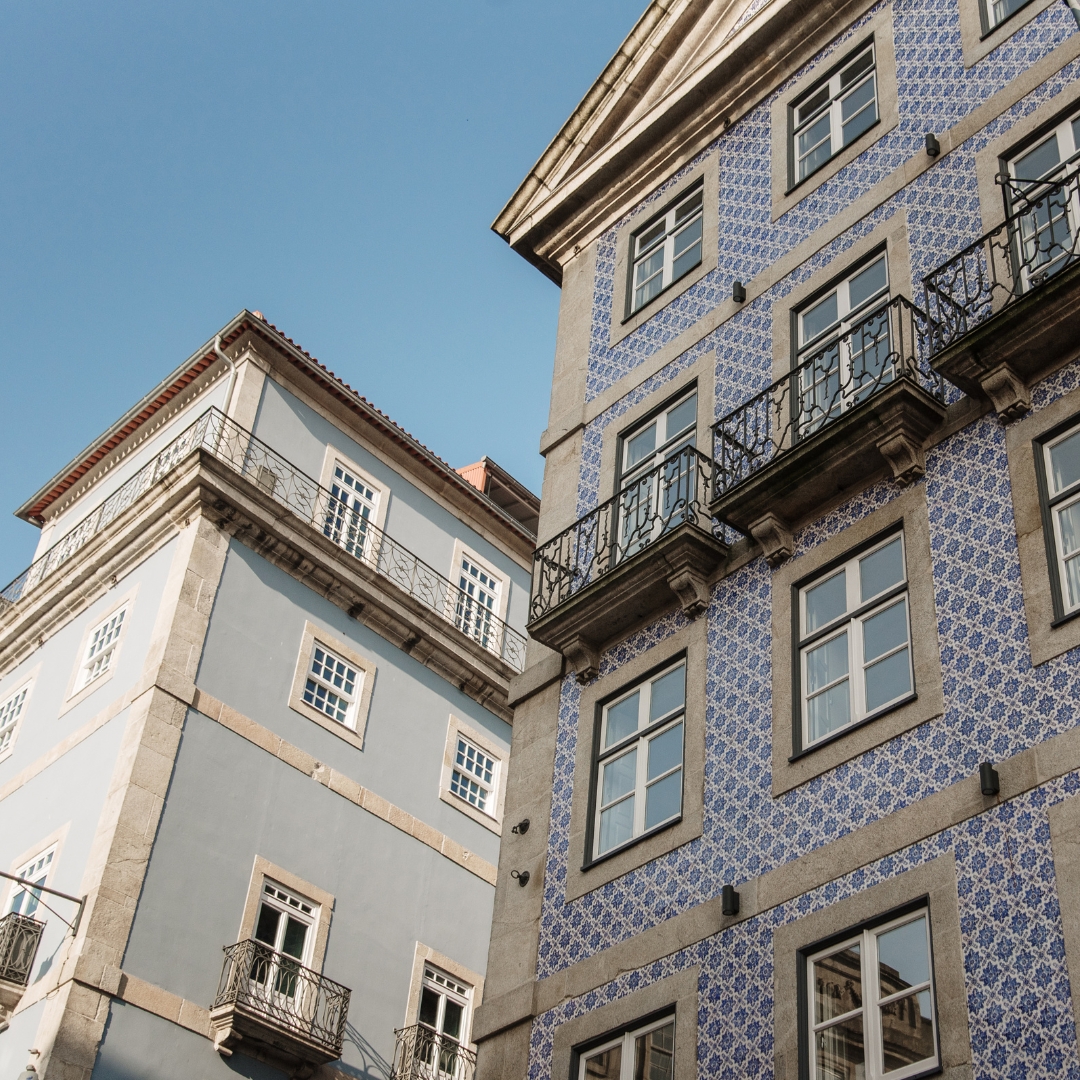
The Portuguese property market offers a mix of historic apartments, modern condos, and sprawling countryside villas. When renting, standard lease agreements typically last between one and three years.
Renting and Buying
Portugal offers a wide range of housing, from historic city‑center apartments to modern coastal villas and rural farmhouses.
Strong demand from locals, tourists, and expats has driven prices up in Lisbon, Porto, and popular coastal areas, but many smaller cities and inland towns remain comparatively affordable.
Renting vs. Buying
Renting is often the most flexible way to start life in Portugal.
- Short‑term rentals and Airbnbs let you test neighborhoods but can be expensive; long‑term leases (1–3 years) are cheaper and come with robust tenant protections.
- In Lisbon, a central one‑bedroom can range from about €800 to €1,500+ per month, while similar places in Porto or Coimbra might start at €600.
- Many rentals come furnished, which simplifies the move, but landlords often require proof of income, a Portuguese tax number (NIF), and sometimes a guarantor or several months’ rent upfront.
Buying can make sense if you are committed long term, but you should not underestimate transaction costs and bureaucracy.
- Property is still competitively priced relative to many Western European cities, though prime Lisbon, Cascais, and some Algarve areas are now expensive.
- In rural regions and smaller towns, you can still find houses priced far below major‑city levels, including renovation projects for the price of a car.
- Expect additional costs such as IMT (transfer tax), stamp duty, notary and registration fees, and legal support; many expats use local lawyers to check titles and contracts.
A common strategy is to rent for at least 6–12 months to learn the market and lifestyle, then decide whether and where to buy.
What are the best neighbourhoods to live in Portugal for expats?
Portugal offers a variety of attractive cities and neighbourhoods for expats, each with its own character and benefits depending on lifestyle preferences, career opportunities, and budget.
| Neighbourhood | The Attractions |
|---|---|
| Lisbon | Vibrant, historic, and cosmopolitan. The beating heart of Portugal’s tech and business scene. |
| Porto | A dynamic cultural hub with riverside charm, a thriving arts scene, and a slightly slower pace than Lisbon. |
| Cascais & Estoril | Known as the "Portuguese Riviera." Luxurious, coastal, highly safe, and offering world-class golf and international schools. |
| The Algarve | Sun-soaked paradise with over 300 days of sunshine, stunning cliffs, resort-style living, and an established English-speaking community. |
| Central / North (Braga, Coimbra, Aveiro) | Deeply historical with high student energy. Incredible value for money, peaceful, and surrounded by nature. |
Education System in Portugal for Families with Kids

Expats moving to Portugal have several education options for their children, depending on their preferences and long-term plans. The most common option is the public school system, which is free for residents and provides education primarily in Portuguese.
Schooling in Portugal is compulsory from age 6 to 18 and is structured into primary education (ensino básico) and secondary education (ensino secundário). Public schools follow the national curriculum and prepare students for university or vocational pathways.
For families seeking an international curriculum or continuity with their home country’s education system, international schools are widely available in cities such as Lisbon, Porto, and in the Algarve region. These schools often offer programmes such as the International Baccalaureate (IB), the British curriculum, or American-style education, making them a popular choice for globally mobile families.
The public education system is free for all residents and is taught entirely in Portuguese. This is an excellent route for younger children, as total immersion is the fastest way to learn the language and integrate into the local community.
For families seeking continuity with their home country’s education system, international schools are widely available, particularly in Lisbon, Cascais, Porto, and the Algarve. These schools offer programs such as the International Baccalaureate (IB), the UK national curriculum, or US-style education. Due to high demand among expats, it is highly recommended to apply well in advance.
Portuguese private schools are an alternative offering specialized programs, often with smaller class sizes and bilingual instruction. These require tuition fees but generally cost less than fully international schools.
Available for children from ages 3 to 5, early childhood education helps prepare kids for formal schooling. While not mandatory, it is widely utilized through both free public and paid private providers.
Many expat families choose a hybrid path, starting with international schools to ease transition and then considering public schools once children are more comfortable with Portuguese. It is wise to research and apply early, especially in popular regions where places can be limited.
Healthcare system for expat moving to Portugal
Portugal boasts a high-quality, publicly funded universal healthcare system known as the Serviço Nacional de Saúde (SNS). It provides essential medical services at a very low cost or completely free for citizens and legal residents.
As an expat, your eligibility begins once you obtain your official residence permit and register at your local health center (Centro de Saúde) to receive your SNS user number (Número de Utente).
Portugal’s healthcare system combines a public service (SNS) with a large private sector, and this structure is important for expats to understand. Residents can usually access the public system at low cost, while private insurance remains relatively affordable compared to many countries.
- Once you’re a legal resident and registered locally, you can obtain a user number and use public health centers and hospitals, usually paying small co‑payments.
- Care quality is generally good, but waiting times can be long for non‑urgent specialist appointments and procedures.
- Private clinics and hospitals offer faster access and more English‑speaking staff, which many expats value.
- Private health insurance premiums are generally lower than in the US and many other high‑cost countries, especially for younger or healthy individuals, though costs rise with age and pre‑existing conditions.
Portugal has a public healthcare system (Serviço Nacional de Saúde – SNS) that provides residents with access to hospitals and general medical services at low cost or free, depending on the treatment. Patients may pay small co-payments for certain consultations or services.
However, services such as dental care, vision care, and some specialist treatments are often not fully covered, which is why many residents choose to purchase private health insurance for faster access and a wider range of providers.
Portugal’s healthcare system is well regarded for its quality and accessibility, particularly in major cities. However, wait times for non-urgent specialist appointments in the public system can sometimes be longer.
For most new arrivals, consulates expect proof of private health insurance covering your stay until you are fully integrated into the national system. Remote workers and retirees should also coordinate coverage from their home country (e.g., Medicare rules for US citizens or social security agreements) with Portuguese systems to avoid gaps in care.

Tax Implications for Expats in Portugal
Cultural Differences to be Aware of When Moving to Portugal

When moving to Portugal, adjusting to the local culture is key to a smooth transition. The most notable difference for many expats is the pace of life. The Portuguese value work-life balance, family time, and leisure. Bureaucracy can often be slow and paper-heavy, requiring a great deal of patience and an understanding that things may not happen as quickly as they do in North America or Northern Europe.
The culture is exceptionally warm and polite. Greetings often involve a handshake or, among acquaintances, two kisses on the cheeks (left, then right).
Coffee culture is a daily ritual; stopping for a quick espresso (bica) at a local café is a standard way to socialize or take a break. Dining times are also later, with lunch around 1:00 PM to 2:30 PM, and dinner rarely starting before 8:00 PM.
While English is widely spoken in urban centers, the Algarve, and among younger generations, making an effort to learn basic Portuguese will endear you to the locals and make navigating daily life significantly easier.
Conclusion
Moving to Portugal is an exciting opportunity to enjoy a high quality of life, stunning landscapes, and a warm, welcoming community. While navigating visa applications, obtaining a tax number (NIF), and understanding the local property market may seem challenging at first, careful planning will make your transition smooth. Selecting the right accommodation, familiarizing yourself with the healthcare system, and embracing Portugal’s relaxed and vibrant culture will help you and your family settle in comfortably.
Professional international moving services such as Crown Relocations can simplify your relocation by managing logistics, assisting with home searches, and providing settling-in support. By understanding cultural nuances and preparing thoroughly, you can fully enjoy Portugal’s abundant opportunities and make your life abroad truly rewarding.

No One Knows Better Than Us.
Get moving with our free moving quote form and let us take care of the rest!
