 International
  Kenya
Kenya  South Africa
  Australia
  New Zealand
  China
China  Hong Kong
  Japan
Japan  Macau
Macau  Mongolia
  South Korea
  Taiwan
  Austria
  Belgium
  Czech Republic
  Denmark
  France
  Germany
  Ireland
  Italy
Italy  Netherlands
  Norway
  Poland
  Spain
Spain  Sweden
  Switzerland
  Turkey
  United Kingdom
  Saudi Arabia
  United Arab Emirates
  Canada
  Mexico
  United States
  Bangladesh
  India
India  Sri Lanka
  Cambodia
  Indonesia
  Malaysia
  Philippines
  Singapore
  Thailand
  Vietnam
 Effortless Moving, Tailored For You
Moving house around the Philippines can feel like a major project – traffic, weather, and building rules can turn even a short move into a long day.
How to Choose Secure Storage
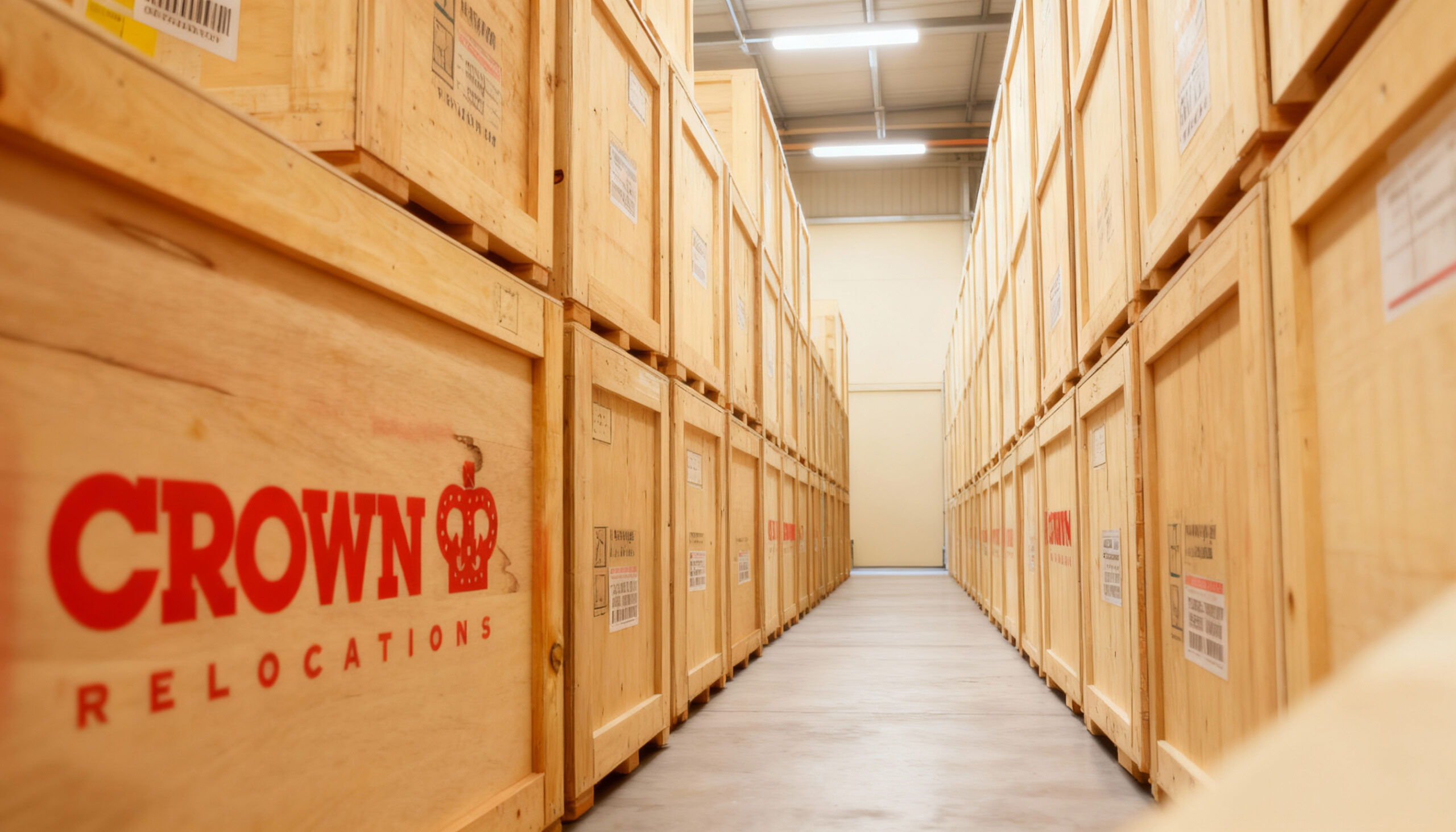
“Secure storage” is a popular label, but the experience can be very different depending on who you choose. Use this as a practical guide before you commit, especially if you are storing items during a condo move, a renovation, or a downsizing phase.
Start with the basics: security and control
You want more than a locked door.
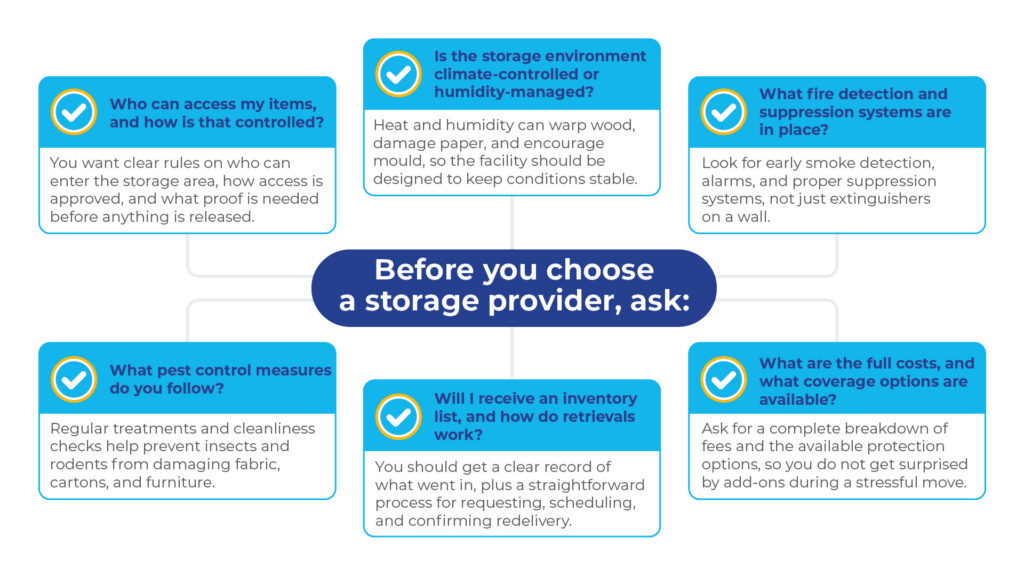
- 24/7 CCTV monitoring and clear security coverage
- Controlled access so not just anyone can walk in
- On-site security or regular patrols
- A proper release process so items only leave with the right authorization
If a provider cannot explain how access is managed, that is usually your answer.
Check the environment, not just the unit
Heat and humidity can quietly damage belongings.
- Climate control or humidity management
- Clean, dry storage areas with good ventilation
- Items stored off the floor to reduce moisture risk
This matters a lot for paper, books, photos, leather, wooden furniture, electronics, and mattresses.
Ask about fire protection and emergency readiness
Do not stop at “yes, we have extinguishers.”
- Smoke detection and alarm systems
- Fire-safe layout and construction controls
- Suppression systems and clear emergency procedures
A storage facility should be built to prevent small issues from turning into a major loss.
Look for cleanliness and pest control
Secure storage should also be clean storage.
- Regular pest control program
- No signs of mold, leaks, or water staining
- Loading areas that are kept tidy and protected
If the place smells damp or looks poorly maintained, your items will not come out in the same condition.
Make sure handling is professional from start to finish
Storage problems often start before items even reach the facility.
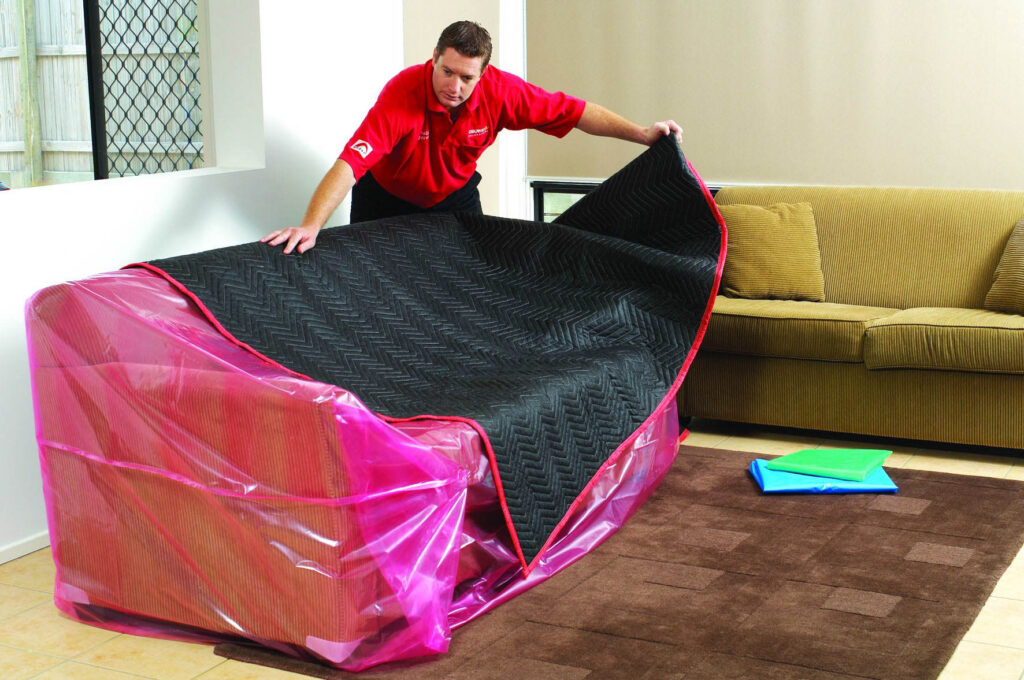
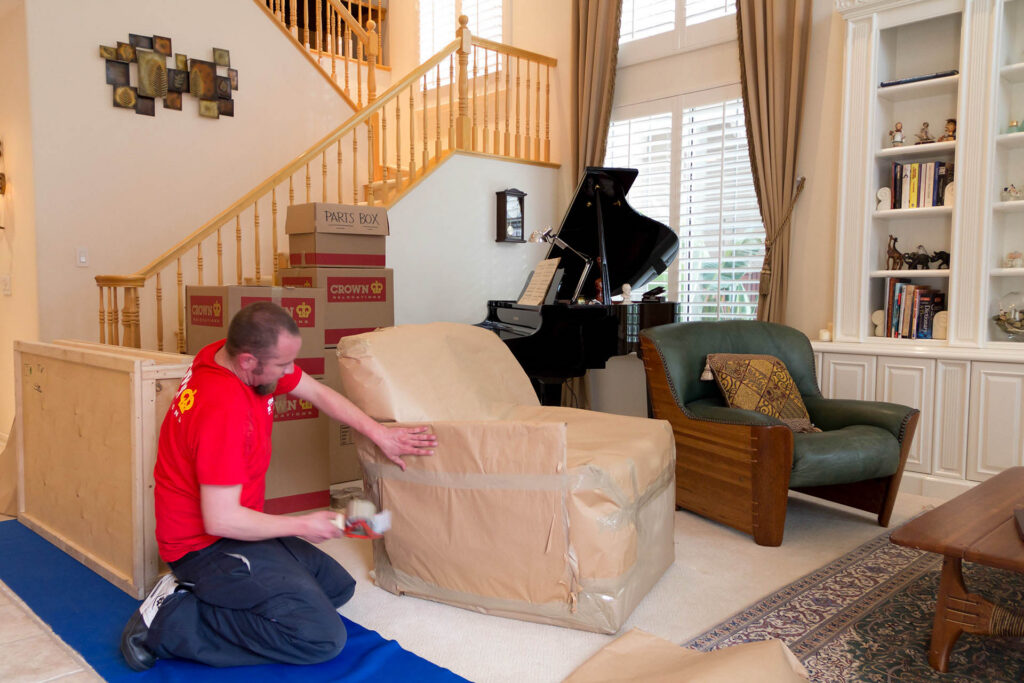
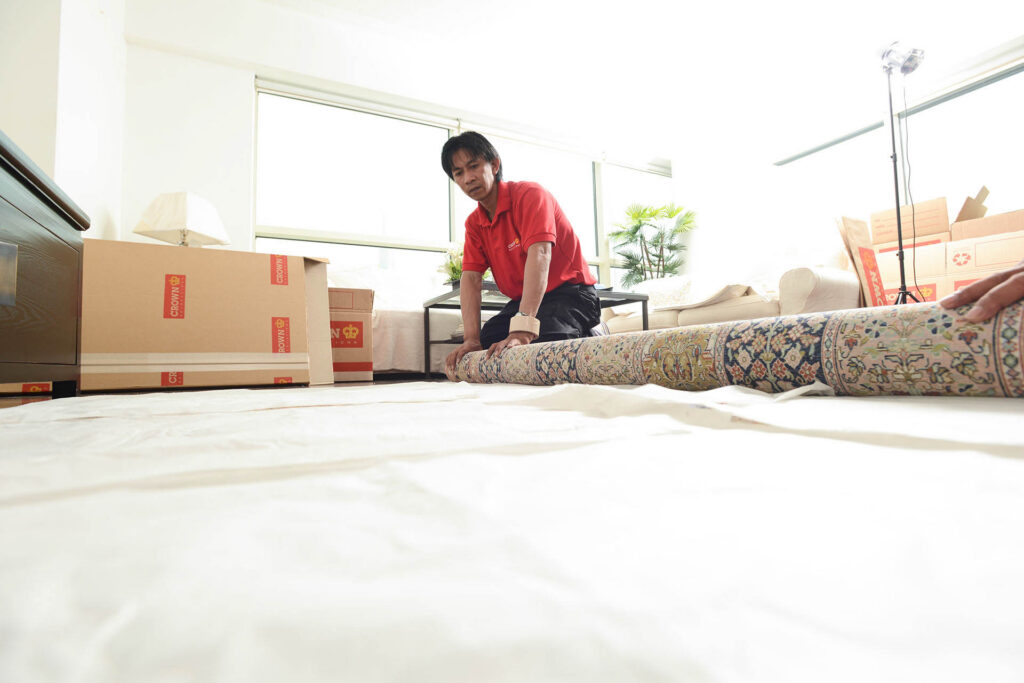
- Proper packing materials and wrapping for long-term protection
- Careful handling for fragile and bulky items
- Fewer handoffs so your belongings are moved less, and damaged less
Door-to-door pickup and redelivery can also reduce risk because you are not doing multiple trips yourself.
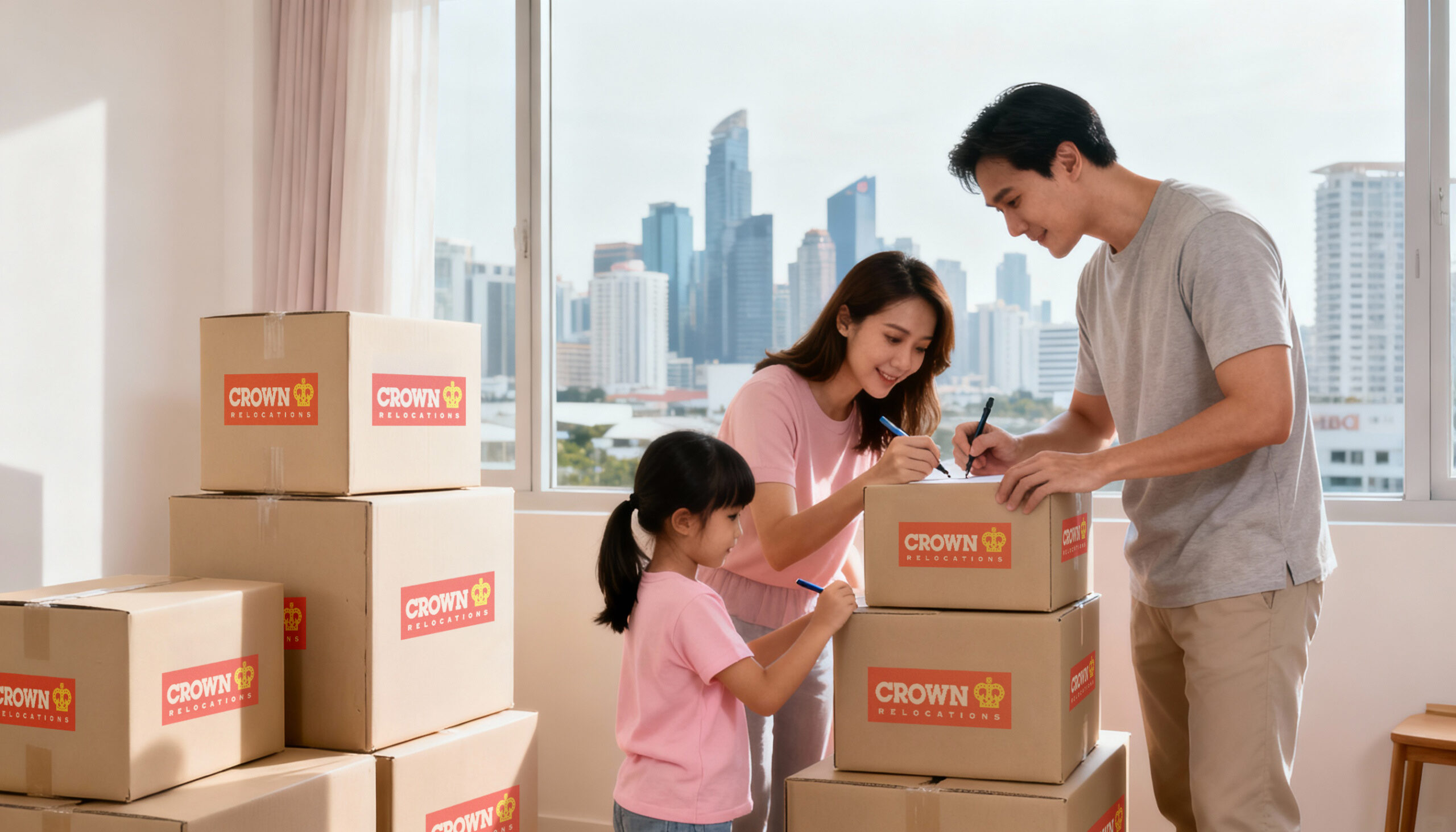
Confirm inventory and accountability
You should be able to answer, “What exactly did we store?”
- Itemized inventory list
- Clear labelling or tracking
- Defined retrieval and redelivery process
- Proof-of-release controls so the right person receives the right items
Review the terms, pricing, and coverage
Moves change. Your storage plan should be able to change too.
- Transparent pricing and clear minimum terms
- Clear fees for pickup, redelivery, and access
- Flexible extensions if turnover dates shift
- Coverage options and a straightforward claims process
If pricing is vague or full of hidden conditions, it usually becomes stressful later.
Flexi-Term Secure Storage For Your Belongings
Our storage services are designed for individuals who need a safe place to store their personal belongings, whether for a short period or long term.